 The blackwater aquarium
Who doesn't know them, the biotope aquariums with brown water in which rare, soft-water-loving ornamental fish are kept? What exactly is a blackwater aquarium and what do you need to keep in mind? This article gives you the right tips on the subject.
A blackwater aquarium is a special biotope aquarium that recreates the conditions of certain tropical waters whose water has the typical dark color (hence the name). The brownish color comes from the release of humic substances and tannins from natural components such as wood and leaves. In its natural environment, blackwater is also very soft, extremely acidic and contains only few dissolved salts. Readings such as a pH below 5 and a low conductivity of less than 10 µS/cm are typical in such biotopes. It also has no detectable carbonate hardness (KH). A buffer system that supports the pH works differently here. In blackwater, the pH buffer is formed by humic acids, which are produced when the many plant parts that have fallen into the water rot. This is how the pH in such waters can drop to values below 5 and still be stable at the same time.
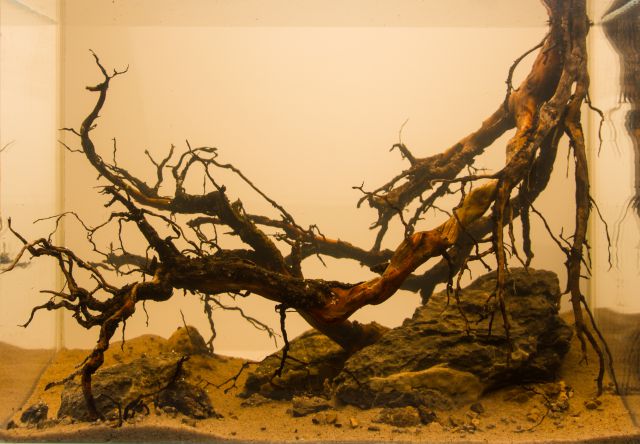
Blackwater aquariums are used to keep ornamental fish that need these special water conditions for their health and, above all, for successful breeding. Examples include neon tetras or other tetras from South America, as well as chocolate gouramis or bettas from Southeast Asia.
Making blackwater
The characteristics of blackwater are an acidic pH, a very low carbonate hardness, the brownish color of the water and, of course, the humic substances. To produce such water for your ornamental fish, you need special water treatment or filtration. A time-tested method is filtering through peat. This adjusts the water parameters such as the pH accordingly and also produces the corresponding brown color of the water. Producing low-salt water with a reverse osmosis system and using humic substance products is also a common method. Caution is advised here, however, because water that is too soft and too acidic can cause a pH crash if the pH drops too far. The aquarist should ensure stability here, so adding a humic substance product is particularly important.
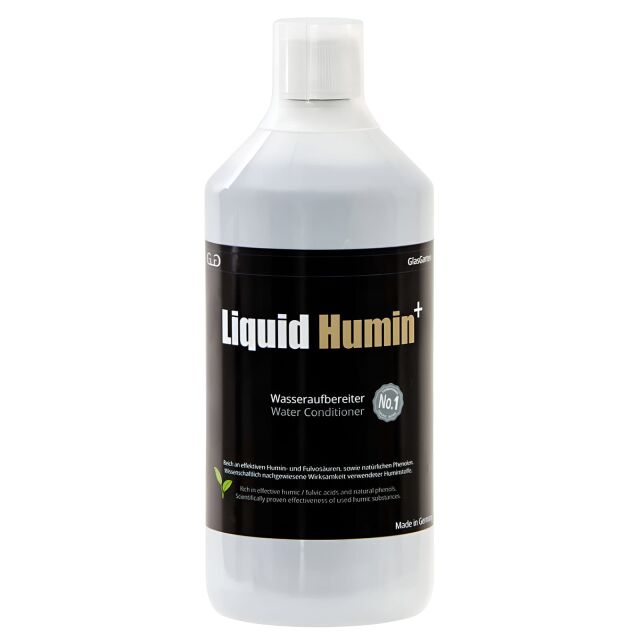
You can also add humic substances and achieve a brown color through other natural products. These include in particular aquarium driftwood, alder cones, in some cases soil substrate, and Indian almond leaves. However, the release here is sometimes less steady than with the targeted addition of a liquid humic substance product. The latter is also much easier to dose. To maintain the brown color, regular redosing is necessary, for example every week after a water change.
For decorating a blackwater aquarium, however, driftwood, alder cones and leaf litter are still important elements for creating a natural environment. Since the brown water absorbs a lot of light, you can use robust shade plants that cope with the parameters. A blackwater aquarium can also remain unplanted, much like in the wild. A rather sandy substrate and a few rounded stones can round off the overall picture nicely.
Humic acids act as a buffer
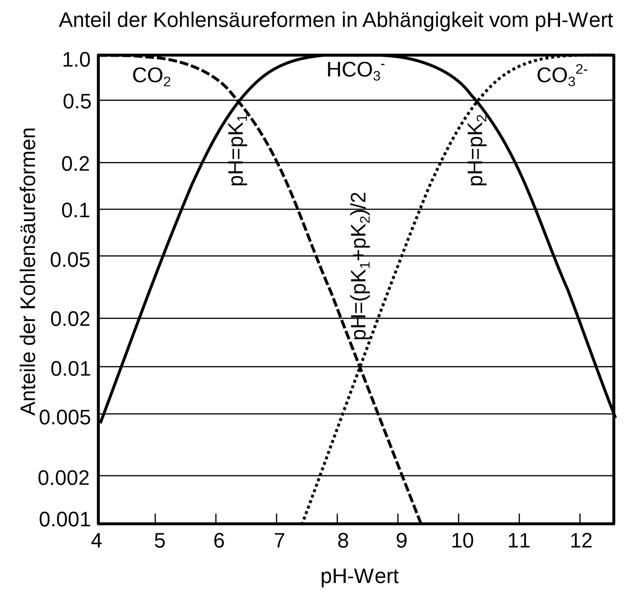
Image credit: Johannes Kalliauer - Own work via Wikimedia Commons, License: CC BY-SA 4.0, Source attribution.
In aquarium keeping, the so-called carbonate-carbonic acid equilibrium, which describes certain dependencies between carbonic acid, carbon dioxide and calcium carbonate, usually serves as the buffer system that stabilizes the pH. But other substances can also play a role and act as a pH buffer, such as the phosphate content of the water. Following nature's example, you can also use humic acids, which do not occur in tap water and therefore have to be added separately. The presence of humic acids in the water establishes another buffer system, which can buffer the pH at much lower levels than the buffer based on the carbonate-carbonic acid equilibrium. Even when the carbonate hardness is close to zero, the humic acids make a stable pH down to about 4.5 achievable. The risk of a pH crash is then low when you use, for example, peat and the humic acids it contains, since they act as a buffer.
Peat filtration or other additions of humic substances are therefore a very good solution, especially for ornamental fish and invertebrates that love very soft water and do not tolerate CO2 injection well. These include discus fish, for example.
Other properties of humic substances
It is now known that humic substances in aquarium water have direct as well as indirect effects on the inhabitants of an aquarium. Today this is even scientifically proven.
In the wild, humic substances play an immensely important role. In a blackwater biotope there are hardly any minerals such as calcium, which the animals need for building their skeletons. Such an environment must be classed as rather hostile to life. Only thanks to humic substances are these fish able to absorb these important minerals. For this reason, humic substances are even vital when keeping animals from such blackwater habitats in the aquarium, because they have adapted very strongly to their presence and use. Humic substances are therefore vital for such animals from soft-water habitats. Would you like to learn more about humic substances? Then keep reading here.