 Live food for your aquarium
Suitable live food for aquarium fish, but also for invertebrates such as shrimp and crayfish, is a natural source of the numerous nutrients that the animals need, made available to them in fresh form. For predatory species in particular, it also supports the hunting drive. In this article we would like to list and explain in more detail which types of live food there are for aquarium fish.
Advantages of live food in the aquarium
Feeding live food is the most natural form of nutrition for aquarium animals. It stimulates the hunting instinct in predatory species and also increases the readiness to spawn and thus breeding success. Live food is rich in nutrients such as vitamins, unsaturated fatty acids, proteins and trace elements. For aquarium fish in particular, live food is a welcome change from the daily staple food. There are also quite a few species that are so picky that they only eat live food. For them, providing live food is therefore vital.
Disadvantages of live food in the aquarium
Keeping, storing and breeding your own live food is of course somewhat more laborious for the aquarist than simply putting down a can of dry food. With live food, too, you should feed as varied a diet as possible and switch between the types now and then. Especially with feeder animals that are very high in protein and fat, you should feed these species rather sparingly. Otherwise the animals can become fatty, get sick or grow and age too quickly. Here, too, it is important to pay attention to a healthy balance in the diet. On the other hand, the range of possible live food is very broad.
Types of live food
In a well-stocked pet store you can buy quite a few types of live food directly. Beyond that, the aquarist has other ways of getting live food. Besides the typical "pond dipping" (collecting live food from natural waters; here you must first clarify the necessary legal basis of the respective federal state), you can also easily breed certain types of live food at home yourself. A short list follows.
Breeding artemia yourself

Above all, the popular artemia nauplii are a very popular live food for ornamental fish that have only a small mouth. This type of food is also often used for raising fry. Adult artemia can also be bred from the nauplii and can then serve as live food for larger ornamental fish. Breeding these feeder animals is quite simple; all you need is artemia eggs, suitable salt, a hatching container and a diaphragm pump. In this article we go into more detail about breeding artemia.
Water fleas
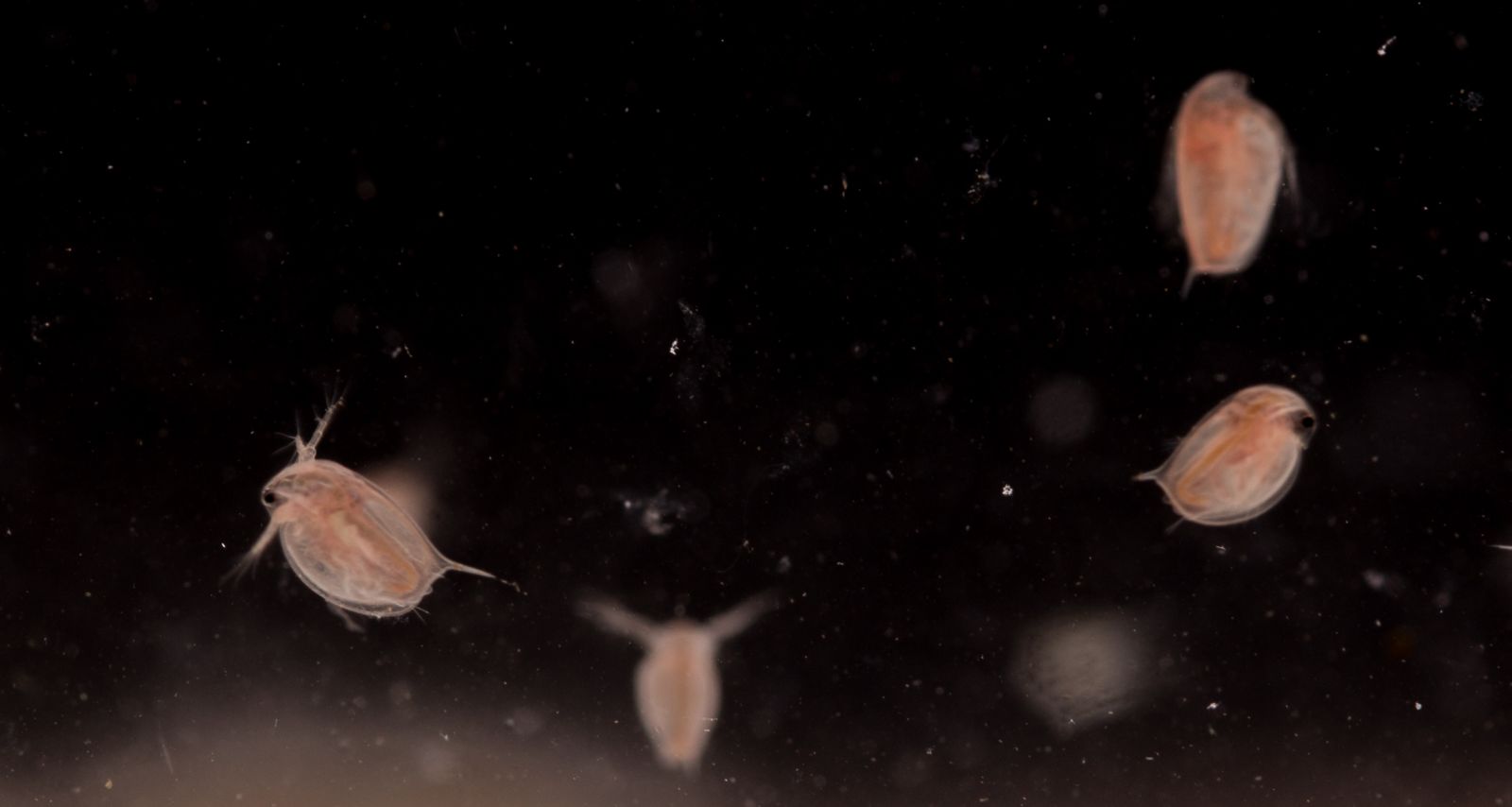
Water fleas are a very popular live food for aquarium fish of various sizes. They offer a high vitamin content and are rich in roughage. They are quite easy to breed yourself, but are also available as live food in pet stores and can sometimes be caught by "pond dipping" in natural waters (please clarify the necessary legal basis of the respective federal state beforehand). You can find more information about water fleas here.
Black mosquito larvae

Source and copyright: James Gathany, CDC - Own work, license: CC BY 2.5.
Black mosquito larvae (in German aquarium slang abbreviated to "Mülas") are a very well suited live food, as they are rich in vitamins and roughage, but also provide just as much protein and some fat. They are rather rarely found in stores, but are quite easy to breed yourself. Every garden owner will already know mosquito larvae from open rain barrels or other containers in the summer months. This live food is well suited for many ornamental fish species, but above all for animals with an upturned mouth. You can find more information here in our article about black mosquito larvae.
Blackworms

Source and copyright: Dvortygirl - Own work, license: CC BY SA 3.0. The worm has a double tail due to an injury.
Blackworms, which are closely related to earthworms, are a rich source of food for ornamental fish in the aquarium. They can grow quite long (up to 10 cm) but stay thin, so even smaller fish such as guppies can eat them. Blackworms are also excellent live food for crayfish. Since the worms contain a lot of fat and protein, they should only be fed now and then. Would you like to learn more about blackworms? Then take a look here.
Infusoria

Source and copyright: Frank Fox via Wikimedia Commons, source credit, license: CC BY SA 3.0 DE. The photo shows a ciliate.
When it comes to the tiniest live food, infusoria are a popular choice in aquarium rearing. This refers to various single-celled organisms that can feed even very small fish larvae in a species-appropriate way. Infusoria contain a lot of necessary nutrients. They are a good food when the young animals cannot yet eat small microworms and artemia nauplii. Infusoria can also be bred well at home with a starter culture. You can find more information on this here.
Vinegar eels

Vinegar eels next to a freshly hatched brine shrimp. Source and copyright: Andrew Bogott - Own work via Wiki Commons, license: CC BY-SA 4.0, source credit.
Vinegar eels are rich in fat and protein and, because of their small size, an ideal live food for smaller ornamental fish, juvenile animals and also shrimp. Because of the high nutrient content, however, you should not feed them too often. These small worms are related to nematodes and only grow one to two millimeters long. The worms can be bred relatively easily yourself in a starter culture. You can learn more about breeding here.
Enchytraeids

Source and copyright: Paul Bachhausen via Wiki Commons - Own work, license: CC BY SA 3.0 DE.
These whitish worms are oligochaetes and are rich in fat and protein. You should therefore only feed this live food sparingly so that the animals in the aquarium do not become fatty. Enchytraeids are a good live food for various types of ornamental fish and grow to a maximum of 3 cm long. The worms can also be bred yourself; here you will find instructions for this.
Brachionus

Source and copyright: Sofdrakou - Own work, license: CC BY 4.0.
Especially for very small fish larvae, tiny live food such as Brachionus plicatilis is a good source of nutrition. These are also referred to as saltwater rotifers. You can breed these small multicellular organisms yourself, but you need brackish water for it. This has the advantage that there is no risk of bringing in freshwater parasites. Here you will find further information.
Grindal worms

Source and copyright: Cherus - Own work via Wiki Commons, license: CC BY-SA 3.0, source credit.
Grindal worms can also be bred relatively easily yourself and are an excellent source of fat and protein. As with other worm-like live food, given their ingredients they should only be fed rarely. Grindal worms only grow to about 1 cm long and are therefore also well suited for smaller ornamental fish species. Since they sink well to the bottom, they are very well suited for carnivorous bottom dwellers and also for shrimp in the aquarium. You can find more information about grindal worms here.
Paramecia

Source and copyright: Frank Fox - Own work, license: CC BY-SA 3.0 DE.
Especially for small baby fish, paramecia are a good way to provide suitable live food. Above all for fish species whose young cannot yet manage even artemia nauplii, these well-multiplying single-celled organisms are an excellent choice of food. With a starter culture, paramecia can also be raised well yourself. Here you will find further information.
Microworms

Source and copyright: Stug.stug (talk) - Own work via Wiki Commons, license: CC BY-SA 3.0, source credit.
As live food, microworms are also known under the names banana worms or Walter worms. These tiny worms are nematodes that only grow one to two millimeters in size. Especially for small fish species and tiny larvae, the worms are a very rich live food. Since the worms sink quickly, they are also of interest to bottom dwellers such as crayfish and shrimp. The worms offer plenty of protein and fat. Microworms, banana worms and Walter worms are quite easy to culture. You can find more information on this in this article.